New Costume, Old Discipline

For months now, the feed has been full of a new craft. People ship a feature overnight, post numbers, and draw their “harness” - boxes, arrows, a loop in the middle - like it’s a brand-new field. Some of the numbers are real, and hard to wave away.
But that one word covers a lot. One person’s harness is a serious system: gates, checks, guardrails. Another’s is a while-loop and a text file. A third has nothing concrete underlying the diagram at all. When one word stretches from a production system to a weekend hack, it has stopped describing anything.
So forget the word for a minute. Ask what actually changed underneath?
What actually got cheap
A year ago the argument was whether the models were good enough to trust with real work. That argument is over. They are - at least for the ordinary stuff, the code you could write in your sleep but never had the hours for. Getting it right is still hard.
Code is merely a translation layer that allows us to unambiguously describe the way a system should behave - and behaviour, in any non-trivial system, was always the expensive part.
With the cost of writing code collapsing, it moves the bottleneck and exposes a much bigger problem. The hard part is standing exactly where it always stood - deciding what to build, and making it behave exactly as required.
Writing code was always only a part of the job. I firmly believe, there are still far more significant functions of the job, which are still unresolved. Knowing what to write was and is still part of the job. Which problem is worth a quarter. What architecture shape survives year six. Whether the thing you built behaves when the inputs are ugly and the traffic is real. That’s judgement, not typing.
A passing test suite won’t tell you any of that. It only says your tests agreed with you.
A costume, not a discipline
That judgement is what a harness is supposed to hold together. Look at what one actually is, under the diagram: a model, some tools it can call, some data it can reach, and a loop that keeps checking until the work holds up. We’ve been building that way long before a model could write a line.
The file of rules you hand the agent is the CONTRIBUTING.md doc every project already had. The evals are tests with a bar to clear. The subagents - one job each, clean edges - are the modules someone wrote a paper about in 1972. Pull the shine off titles and you find a technique in practise for decades.
A “harness” is a new costume. Underneath is the oldest process we’ve got: the plain craft of building software that lasts. When anyone can churn code, the only distinction between a real system and a convincing demo is the judgement behind it.
You can watch the hard part bite right now. The year AI took off, developers started pasting more code than they reused - fresh blocks dropped in where old code would once have been reworked. In a separate study, seasoned engineers on serious tooling shipped slower while swearing they were faster.
The boring way wins
The bottleneck moved; AI amplifies functions. Discipline gets sharper. Sloppiness a.k.a technical debt gets worse, much faster now.
I’ve been working with the frontier and enterprise clients for over a year now. It is by virtue of being very good at what I do and lucky enough to be working with exceptional talent, I happen to see the good side of this shift too.
In July we shipped one of these “harnesses” for a client’s complex member onboarding - old discipline, principles and done properly with patience. Five weeks from kickoff to production. Almost nothing broke once it was live. In the first full month, the same team onboarded 5x members. The case study has the rest, with their CEO on the record.
The harness wasn’t clever. The fundamentals were sound, and the model amplified them.
I led that build, among many, so allow me the shameless plug: This is what the amplifier does for engineers who sweat the fundamentals and from first principles: we have never had more reach, power and responsibility. On release day, I posted “Told you I got this.” Leadership replied with one word.
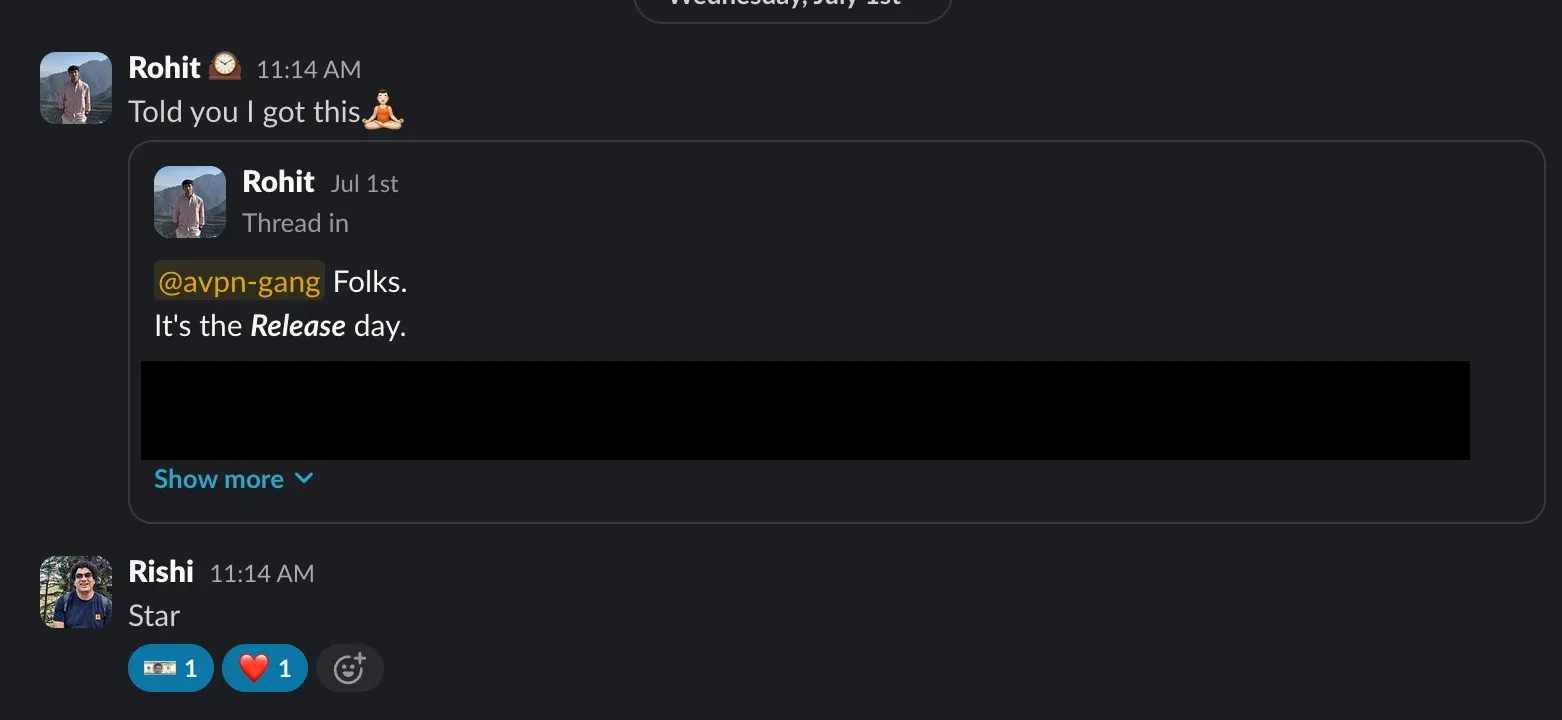
So the next time a blog sells you a new discipline or fancy title, run it through one question. What first principle sits underneath the name - and would it survive with the buzzword stripped off?
First principles rarely change over decades.